Processes and Competitors to Animal Technology
The Perfect Process
When I was in college, I obtained my first Apple computer, a first-generation MacBook Pro. From then on, I was firmly indoctrinated into the Apple universe. I loved the sleek, minimalist design, the sturdy construction, and intuitive, Unix-based operating system. Immaturely, I argued with friends and acquaintances about why Macs were better than their competition. And I naturally followed Apple-related news, especially regarding products. Rumors of an Apple smartphone had been spreading through the computing world, and finally, on January 9, 2007, during an Apple keynote address, Steve Jobs introduced the iPhone to universal approbation.
The iPhone reveal was a watershed moment. At the time, I was in college, and few peers had a smartphone. Those who did would often buy one without a data plan and use it to connect to the campus Wi-Fi. Pre-iPhone, smartphones were entirely of the BlackBerry mold where the screen would take perhaps half of the surface, and the other half would be the separated keyboard with plastic, recessed buttons. These phones were largely viewed by my peers as neat, but strictly functional—an instrument catering to bankers, financiers, and CEOs—and whose purpose was to respond to emails during the taxi ride from the airport to the client meeting. With previous smartphones, not too many of my friends pined for one, but that completely changed with the iPhone. I worked as a teaching assistant during the summer of 2007, and one of the students had an iPhone. I noticed that, when other students first were introduced to that student, the greeting was generally followed with a request to see and interact with the iPhone.
The rest of this story is well known. The iPhone’s design was reproduced by Apple’s competitors and rapidly antiquated the push button, BlackBerry style. Smartphones also became far more ubiquitous. In 2010, while working for AmeriCorps on my picayune salary, I got my first smartphone, the HTC Incredible. Within five years, the norm turned from not having a smartphone to having one. The smartphone is perhaps the most striking and obvious example of the technological achievement of today compared to twenty years ago. I recall a Reddit.com discussion thread where a prison lifer was released after decades and witnessed a smartphone for the first time in befuddled amazement.
The iPhone was a striking leap forward compared to competitors. Somehow Apple’s approach to the fundamental concept of a smartphone was vastly more prescient and advanced than everyone else’s. In the traditional paradigm, a design team first creates a prototype.1 This prototype is then passed to the engineering team. The engineering team notices intractable features in the initial design, and then strips out those features. After engineering, manufacturing examines the now-stripped down design and finds other features incapable of implementation in the manufacturing process. The design is culled even further, leaving an inferior, distant simulacrum of the initial prototype. The product is only improved upon in the next design cycle. In contrast, Apple could iterate their designs much faster, thereby reaching a design friendly for manufacturing. Apple designers performed complete cycles of their design, in the process engineering prototypes all the way to trial manufacturing.2 By testing engineering and manufacturing earlier, the constrained, iterated design was amenable for production. Apple’s innovation wasn’t just the perfect product; it was the perfect production process and the rapid path to get there. Other innovative companies such as Dyson follow a similar paradigm of many manufacturing-friendly iterations before the first sale.3
Intuitively, production and scalability should strike us as necessary precursors for a successful industry. Let’s suppose that the iPhone was first created by designers only, in a process where they handcrafted the device. Obviously, that would never work in the market, especially for a smartphone. It would be far too labor intensive and costly for Apple to employ so many iPhone makers, not to mention the problems of quality assurance. Apple would never be able to circulate a handcrafted device to the masses. In the end, the iPhone’s ubiquity also maximizes Apple’s bottom line, as the second greatest fraction of their revenue is now App Store purchases, presumably much of which comes through iPhone usage. Without a process to produce smartphones at scale, the world would be a different place today.
Chemical Engineering
Entire industries will form and disappear based on the existence of a suitable process. For example, during the early European Industrial Revolution, industrialists needed a more efficient way to make alkali, a common ingredient in soap. Up until that point, soap makers had burned seaweed and harvested the alkali from the ash. In 1789, a French scientist, Nicolas Le Blanc, developed a process to convert salts directly to alkali.4 Once tax breaks on salt were offered, the salt-to-alkali revolution crested.5 Today, we continue to make alkali directly from salt.6
Humanity rarely appreciates how important process is, probably because we hardly ever see or notice it; with a few exceptions like when we visit a production site by taking a brewery tour. At the start of the product’s lifecycle is creation, when we require an efficient production process to chemically transform the raw inputs. As discussed though, transformation alone is not enough; the process must be efficient, scalable, and profitable. Enter the discipline of chemical engineering.
Traditional chemistry operates on a small scale. Perhaps you’ve taken a chemistry lab class in high school or college. You may remember a glass beaker or a cylindrical measuring flask. The same tools are used throughout a professional chemist’s career. These are small-scale tools. A chemist may synthesize and/or characterize a particular compound in small batches, often an amount less than a serving of oatmeal. If a chemist figures out the synthesis stages to make an exciting compound, perhaps a new drug, it’s a first step to bringing a product to consumer market. We cannot produce chemical compounds by using a comically large glass beaker: how would we mix the darned thing? How can we ensure that the temperature is evenly distributed throughout this vast beaker? We can’t; we need a new design and science.
Naturally, a chemical engineer’s education focuses on solutions for producing chemicals at a large scale. How can we ensure proper mixing? How can we separate a particular offending compound from our end product? The education includes courses such as kinetics (studying and calculating the speed of chemical reactions and phenomena), heat transfer (how fast temperature transfers through a medium), and separations (how to split mixtures into desired and undesired components). Instead of beakers and flasks, a chemical engineer will employ reactors and distillation columns. A typical college senior, as part of the curriculum, will design an entire process in order to produce a particular compound as their capstone project.
In particular, reactors are large vats that control the conditions necessary for the designed process. They are more scalable than a glass flask; specifically, parameters such as temperature and pressure can be controlled throughout much larger volumes. Reactors can reach multiple stories and hold over 100 thousand liters, roughly the volume of a double-decker bus. These reactors employ a large number of sensors and actuators to maintain the set conditions.
Let’s say that we’re trying to temper chocolate, forming bars from hot, melted chocolate. The liquid chocolate becomes solid as the cocoa butter within crystallizes upon cooling, though an assortment of different crystals are possible (six to be exact).7 Two types of cocoa butter crystals result in soft, crumbly chocolate. Another two types melt too easily, and the sixth type is too hard. Chocolatiers strive for crystal type V, which imparts a glossy sheen, satisfying snap, and melts at body temperature—in your mouth.
Chocolatiers can preferentially form V crystals when the chocolate is cooled at 34° Celsius. If it’s cooled at a lower temperature, the chocolate will be crumbly. A higher temperature makes the chocolate too hard. Furthermore, we want proper mixing so that the crystals form uniformly throughout. Therefore, we fit our reactor with an impeller that rotates and mixes the chocolate smoothly. To control the temperature, we turn on the heat jacket of the reactor to evenly apply heat, and a temperature sensor communicates when the mixture gets too hot or cold and adjusts accordingly.
Processes do not merely satisfy consumer demand, but often swing history as we discussed last chapter with synthetic rubber development. When you buy the latest LeBrons, you’ll find that the sole is mostly synthetic rubber. On the other side of the war, the Axis (Germany) desperately sought oil in order to fuel their war machine. They conducted a folly-ridden invasion of Russia in order to secure oil reserves.8 Operation Barbarossa was so disastrous that it arguably turned the tide of the war against the Nazis, especially since it gave the poorly prepared Russians time to regroup, rearm, and then counterattack.
As with LeBlanc’s alkali innovation, sometimes an existing process has to wait for other conditions to change (e.g. salt taxes) before becoming viable, like the Haber ammonia-producing fertilizer process. The Haber process falls within the chemical engineering categorization, a process to rapidly make ammonia from hydrogen and nitrogen gas. Agriculture is a process to put food on our plates. For the longest period of our history, we struggled to produce food efficiently and reliably. As we found out later, it was difficult to supply a key ingredient—ammonia—to the plants. We relied heavily on animal technology, in the form of manure; however, this was still too inefficient and could not adequately meet our demand.
In the early 20th century, the Haber process was developed, named after the chemist Fritz Haber who discovered it. If hydrogen and nitrogen air molecules interact in our atmosphere, ammonia will only infrequently be produced. Scientists and engineers learned that the reaction occurs most efficiently under pressure, at a high temperature (500° Celsius), and with the help of a catalyst, specifically, iron powder laced with other trace compounds. The catalyst is not consumed in the reaction but instead increases the kinetics of the reaction, or the speed at which it occurs.
The hydrogen and nitrogen molecules will adsorb (stick) to the catalyst surface, allowing them to more easily rearrange and consequently form into ammonia. Fritz Haber demonstrated proof of concept of his process by building a pressurized reactor with catalyst in 1909. BASF, a German chemical company, bought the technology, and by 1910 the process was scaled up to meet industrial demand and eventually enabled the growing of the food that nourished and formed many of the people whom you know and love today. Once again, the product itself (ammonia) wasn’t the determinant; we already had it with manure. Rather, we needed an efficient, scalable ammonia-production process to make it widely available.
In the last chapter, I discussed the idea of knowledge and technologies replacing older, inferior counterparts. Processes are a kind of technology and, accordingly, are subject to the same forces: The Haber process supplanted the competing but inefficient Birkeland–Eyde and Frank–Caro processes, which had replaced animal manure. Synthetic rubber displaced natural rubber as the consumer product standard of choice. Both processes are satisfying clear needs. The Haber process enabled a source of nitrogen for agriculture, and the synthetic rubber industry enabled an electrically and thermally insulating bulk material that is also chemical resistant, pliable, and durable.
In a congruent manner, we can view animals as a production technology. We have already replaced many animal products such as movement (prime movers), ammonia (manure), and fat (oil) for lighting applications. As author Paul Shapiro highlights in Clean Meat,9 whale oil was used as fuel for lamps in the mid-19th century. At one point, the whaling industry was the fifth largest industry in the United States,10 but the advent of petroleum-based fuels such as kerosene put the final nail in the coffin of the whale-oil industry, which had all but disappeared sixty years later. Nevertheless, animal products are still widespread today for gastronomical, nutritional, and some biomedical research needs.
Animal Technology
Humans transitioned into settled societies starting approximately twenty thousand years ago,11 where tribes maintained stationary homes and conducted hunter-gathering forays into the wild. However, sedentary populations depleted local resources rapidly, and a new source for food was required. About twelve thousand years later (or roughly 10,000 B.C.E.), plants were deliberately cultivated and maintained in order to feed a growing population. As far as meat goes, hunting still dominated as the primary food source.
Hunting, likewise, was an unsustainable process to meet the demand of the growing population. Hunters deplete the game on the land around them to the point where, because wild animals do not reproduce fast enough, the distance hunters have to travel becomes too far to reliably fill appetites. Naturally, these initial societies sought to domesticate animals and rear them for meat. The best candidates for domestication satisfied specific characteristics: animals that grew quickly, but with sufficient mass by adulthood (so not small birds).12 The animals had to be tamable and social, thus easier to herd. Carnivorous species were a non-starter because they would require two kinds of husbandry, one for the prey and and one for the carnivores. Ruminant species such as cows could consume abundant grass, widely available at zero or low cost.13 The omnivorous pig was able to eat anything and fatten up quickly, making it ideal to accompany Christopher Columbus on his foray into the Americas.14 Likewise, chickens reproduced readily, could eat just about anything, and were easy to manage because of their docility and limited ability to fly.15 They also provided a near-daily, secondary stream of food in unfertilized eggs.
The commonplace animal products of today would not have come into existence unless the animals themselves had been easy to bring to maturity with superlative process metrics including cheaper input, fast growth, and more meat for less effort. It’s rare to find a pigeon filet or alligator stir fry other than as menu oddities. Cows, pigs, and chicken are the primary supply of animal products today because they lend themselves to better process-engineering compared to other species. We tried cultivating a variety of species, but ultimately these three satisfied our selection the best; the choice was not based on some innate preference.16
Your mind might be saying, “Well, I’ve tried pigeon meat, and it just isn’t very good.” This misses a key point: domestic animals today are the outgrowth of generations of selective breeding. Breeding equates to the directed evolution experiments I highlighted in Chapter 1. A cow will generally vary in a trait, or such variance can be introduced via crossbreeding with another species to produce a desired trait (like growth rate). Similar to the banana, the cows we consume today are vastly different from those found on our ancestors’ dinner plates. Today, cows are even bred for the precise distribution of fat marbles in their flesh or how tender their meat is.17
For a long time after we transitioned to agrarian societies, meat was rare and consumed more rarely compared to the preceding hunter-gatherer days where diets could exceed 90 kg (200 lb.) of meat per year, depending on the region.18 In Ancient Rome, poor individuals consumed an estimated 5 kg (11 lb.) of meat per year.19 The situation was even more pronounced in China during the early 20th century, where poor farmers consumed on average 0.3 kg (0.7 lb.) per year, often during New Year’s or wedding celebrations.20 For reference, today most of the developed world consumes generally over 50 kg (110 lb.) per person annually. 21
At the turn of the 20th century, a shift in animal technology occurred, as documented in Vaclav Smil’s Should We Eat Meat?22 The new Haber process, which allowed increased crop production, also resulted in surplus feed for animal agriculture. Similarly, the development of refrigeration technology, especially in ships, enabled cheaper meat export and import via sea-based trade. As a result, the industrialization of animal technology emerged, where consolidated slaughterhouses located near centralized railheads processed far more animals than a typical farm. Early slaughterhouses were notoriously unsanitary, famously documented by Upton Sinclair in The Jungle in 1905, eventually leading to the Meat Inspection Act and Pure Food Drug Act passed the next year. These acts raised animal treatment and hygiene standards.
Soon, with the industrial revolution hitting full swing, incomes generally rose, and demand for meat grew. Confined animal-feeding operations burgeoned, in which the animals are housed in climate-controlled structures that automate feeding, plumbing, and waste removal. As of today, such operations dominate animal agriculture worldwide except for in Africa and, in first world countries, on the very small percentage of farms practicing organic agriculture. As of 2010, sixty percent of all pork and seventy-five percent of chicken came from confined animal feed operations. These operations are process-wise more efficient compared to traditional animal agriculture (rearing animals on land) and require less manpower in order to produce more meat.23
Starting with a mature, live steer (we largely consume castrated male beef cattle and not females) that weighs in at 450 kg (1000 lb.), the animal is first killed, and the blood is drained. The serum from the blood can be separated from the red blood cells, and after more separation, specific proteins and other biomolecules can be extracted and sold. The protein heparin, for instance, is separated from the blood and sold as an anticoagulant for profits of billions per year.24 The skin is often used for leather manufacturing. After draining the blood and skinning the corpse, the carcass will be about 270 kg (600 lb.). About 160 kg (350 lb.) of this will be the consumed meat or the animal muscle, a matrix of ordered protein more or less marbled with fat. That leaves 110 kg (250 lb.) of bones and additional fat. The structural protein collagen can be separated from the bone. Collagen can consequently be broken down into gelatin; both are used quite extensively in cosmetics and gelatinous foods (e.g. Jell-O). The fat, also known as tallow, was used for frying and making margarine, but that has fallen out of favor over health concerns in the nineties.25
While the animal product industry makes the most of money from meat sales, the allied products of collagen and the blood-based products ultimately add to its bottom line, too. For the pork industry this represents roughly six percent of the value and ten percent for beef.26 This matters because the industry has thin margins: Tyson Foods disclosed an operating margin of 6.5% on its bovine industry in 2018.27 For perspective, Apple28 and Coca-Cola29 boast over twenty percent profits for the last couple of years. This means that Tyson Foods has less leeway when problems happen, i.e. they’re unable to sell as much meat or allied products. Realistically, Tyson would have to raise prices or find a different product to sell in such an event. Accordingly, if animal product producers could not sell the allied products to the cosmetic, research, or pharmaceutical industries, they would have to charge higher prices.
Ultimately though, all animal products are formed from a few classes of large biomolecules: mostly protein with some fat and other smaller molecules sprinkled in that we care about for nutrition (e.g. vitamin B12) or for taste (e.g. heme). I’ve highlighted cases of specialized animal-based proteins, casein and heparin, which garner specific value.
Despite what the consumer may think, many animal products are needed just as bulk protein—the specific protein isn’t important as long as it is protein. For example, the bovine serum albumin (BSA) protein can be separated from the serum component of cow blood. This protein is sold to researchers as a coating agent and standard; it helps quantify other proteins by mass. BSA is a consumer product because it’s abundant (representing fifty percent of the serum’s mass) and otherwise waste from the animal industry.30 Its actual function is inconsequential other than being able to dissolve well in water. Similarly, ground and processed meat is leftover protein and fat mashed together. Again, the chemical details and functions of the protein do not matter in this context.
Food producers likewise do not have to be too concerned with the specific type of protein in some products, especially with the recent explosion of alternatives to animal products. The food company Beyond Meat takes proteins from pea plants to form plant-based sausages and burgers. The important feature of pea protein is its abundance and scalability compared to other plant protein sources. Chemically, pea protein is unexceptional to Beyond Meat other than being available and cheap. Impossible Foods pursues a similar course although it sources soy and potato protein instead. The company JUST released a mung bean-based alternative to egg omelets. The JUST egg is a liquid, but then solidifies on application of heat. Any dissolved protein will eventually denature, forming clumps that separate from a liquid as a solid mass, under the right conditions. Certainly, some proteins are more able than others, but JUST leveraged this basic biochemical fact to perform the egg transformation with mung bean protein. I worked in a startup where we accomplished the same result with blends of pumpkin seeds. You might worry about nutritional differences between different kinds of protein, and we will discuss further in Chapter 6.
Certainly, other animal-based products provide a specific function. Collagen provides a “gluey” property, and gelatin is known for its gel-like properties. Heme confers the slightly metallic taste that apparently is beloved in burgers. Impossible Foods sourced heme from a non-animal source to incorporate into its beef-like veggie burgers.31 Cow and pig fat tend to be semi-solid; at room temperature, they are solid, perhaps even spreadable like butter. They liquefy immediately with application of heat, browning and crisping the meat around them. For Impossible Foods and Beyond Meat, coconut oil has proved the most available and capable substitute.
In summary, animal products can be thought of as providing mainly protein, both bulk and specialized, a semi-solid fat, and other molecules nutritionally or gastronomically of interest like vitamin B12, zinc, and heme, respectively. Any technology that replaces animals will invariably provide these constituents more quickly, more cheaply, and at a higher quality. But of course, as we discussed in the last chapter, we must always pose an alternative. Without an alternative, nothing can supplant animal products. I see potential for replacement with an ancient technology—fermentation engineering.
Fermentation Engineering
Some preceding examples of chemical processes (e.g. soap, rubber) capture only the drudging, lifeless processes of formal chemical engineering, but that’s not always so. Earlier I remarked that brewery tours are one of the few examples where a production process is gleefully brought to the public view. Brewery tours have proliferated as craft (small production) beer exploded in popularity in recent years.32 Cynically, I think brewery tours are an excuse to drink beer under the pretense of sophistication and supporting local business; nevertheless, I’m heartened at any means to showcase a chemical process, especially a biochemical one. Brewing is an incredibly old process, as often noted on such tours. Archaeological evidence suggests that the Ancient Egyptians brewed beer (4 to 5 thousand years ago).33 The oldest operating brewery is Weihenstephaner in Germany, active since 1040.34 Brewing processes continue to exist successfully into the modern age, and if anything, are even more widespread because of their outstanding metrics. Brewing falls under a class of general biochemical processes called fermentation engineering.
Once you complete one brewery tour, you’ve done them all. First, the grain (typically barley) is steeped in warm water to generate the wort, which is a liquid that contains sugars liberated from the grain during the mashing process. Solid particulate is separated from the wort, akin to running a mix through cheesecloth. The brewers then boil the wort and add hops, a pungent flower that imparts bitterness and helps pasteurize what will become the eventual beer, preserving it from spoilage for long duration. Finally, the mixture is cooled, and yeast is added. The yeast cells ferment the beer; in other words, they consume the sugar for their own nutrition.
Metabolizing sugar is a combustion reaction where energy is released, akin to burning fuel or wood. Combustion reactions release energy in the form of electrons, but the electrons must go somewhere; otherwise, combustion cannot occur. For most combustion, oxygen can accept the electrons (and turn into water in the process). That’s why a bonfire is stoked when you fan in more oxygen. The yeast cells in the closed environment of a beer bottle lack the available, receptive oxygen in which to dump their electrons. Instead, biological life must release electrons into other molecules, such as ethanol, to complete the combustion reactions. Humans have this ability, too, though we make lactic acid instead of ethanol. In sum, the combination of available sugar and low oxygen means that the yeast produce copious amounts of ethanol, otherwise known as an alcoholic beverage, in the process.
Brewing takes advantage of a variety of reactors. Go on any brewery tour, and one set of the reactors is obvious, the large metal vats where wort is boiled, cooled, or fed the yeast. I remember touring the Miller Brewing Company in Milwaukee and seeing merely the tops of the large, metal reactors as they protruded through the floor from below. The less obvious reactors are the small ones, imperceptible to the naked eye—the yeast themselves. Yeast cells have control systems like a large-scale mechanical reactor, with microscopic fungi maintaining their internal pH and salt content in order to maximize their performance. Also, as often found in reactors, yeasts contain catalysts in the form of enzymes. Enzymes are specialized proteins that facilitate chemical transformation. In yeast’s case, a collection of enzymes helps turn sugar into three essential ingredients: ethanol, which makes the beer into an alcoholic beverage; carbon dioxide (CO2), which confers the delightful fizziness; and more yeast, which accelerates the brewery process. The reactor analogy is so apt that during my research career, I often deployed the same math used to assess large-scale chemical reactors to evaluate microorganisms such as yeast.35
Additionally, the brewers only need to add what seems a trifling amount of yeast, and the final beer will have much more yeast than at the start. Typically, the brewer will add about two to six grams36 of dry yeast (same weight as a couple of ping pong balls) to a wort mixture of twenty liters (roughly five gallons). At the conclusion of the fermentation, which may take a few days to a few weeks, the number of yeast cells may replicate to number roughly twenty times what was originally added.37 Most of the yeast is dead; however, the dormant cells can be revitalized and used to make another batch of beer. The yeasts can continually perpetuate themselves because of their autocatalytic property—the ability to reproduce oneself, i.e. yeast producing more yeast. In fact, this property enabled yeast to become a staple ingredient for many thousands of years since the start of the agricultural revolution.
Technologically, yeast is not just limited to help make beer. Yeast helps bread rise. Again, the baker just has to add a little bit of yeast starter to the dough. The yeast will consume the starches in the bread, spitting out the CO2, thereby leavening the bread and making it rise. Knead some dough, then cover with a cloth to preserve moisture and put in a mildly warm place, then come back and it seems that there is roughly twice the dough compared to before. Yeast also can be added to mashed grapes, transforming the sugars into alcohol; however, wine is often fermented over longer periods at low pressure with the resulting carbon dioxide insufficient to make the liquid fizzy.
Yeast is not the only microbe used for fermentation. Cultured dairy products such as yogurt, kefir, and cheese require the addition of microbes to convert the milk sugar (lactose) into fermentation products, primarily lactic acid. Similarly, many other foods are the result of fermentation, including obvious ones such as sauerkraut, kimchi, and some tofu to non-obvious ones such as cured sausage, chocolate, coffee, and Tabasco sauce. Interestingly, fermentation food processes have not been replaced by other technology. They have been one of the most enduring food production processes since our ancestral years. While we’ve generally dispensed with old cooking styles such as cooking over an open fire, fermentation methods reign supreme, and there is still much more that we can reap—and learn—from this ancient technology.
To appreciate the power of fermentation-based autocatalysis, consider the correlate with money. A grandfather offers his grandson two choices for an inheritance payout:
• Choice 1: $100 the first year, $300 the second, $500 the third, and so forth for twenty-five years.
• Choice 2: $.01 one year, $.02 the next, and $.04 the third, and doubling every year after that for the same twenty-five years.
So which choice garners more money? Choice 1 provides $62,500 total, but Choice 2 provides nearly five times more at $335,544.31.
Formally, Choice 1 is linear growth, and Choice 2 is exponential (Figure 5). We calculate the change over time by considering each iteration. For Choice 1, each step entails addition to the previous value, specifically the new payout is $200 more than the year before. For Choice 2, the new value is multiplied. With each iteration, the previous value is multiplied by two; therefore, these values grow faster over time. Indeed, for Choice 2, most of the money comes from the latter years, with the 24th year paying out $83,886.08 and the 25th year $167,772.16. In the same way, the amplification with investing occurs too, albeit, far less dramatically. I’m not sure how many people have grandfathers who guarantee a hundred percent return every year. But consider a more modest, realistic example: if you invest $1,000 now into a SPY index fund, and it averages nine percent return per year, then in forty years it’ll be worth about $36,500.
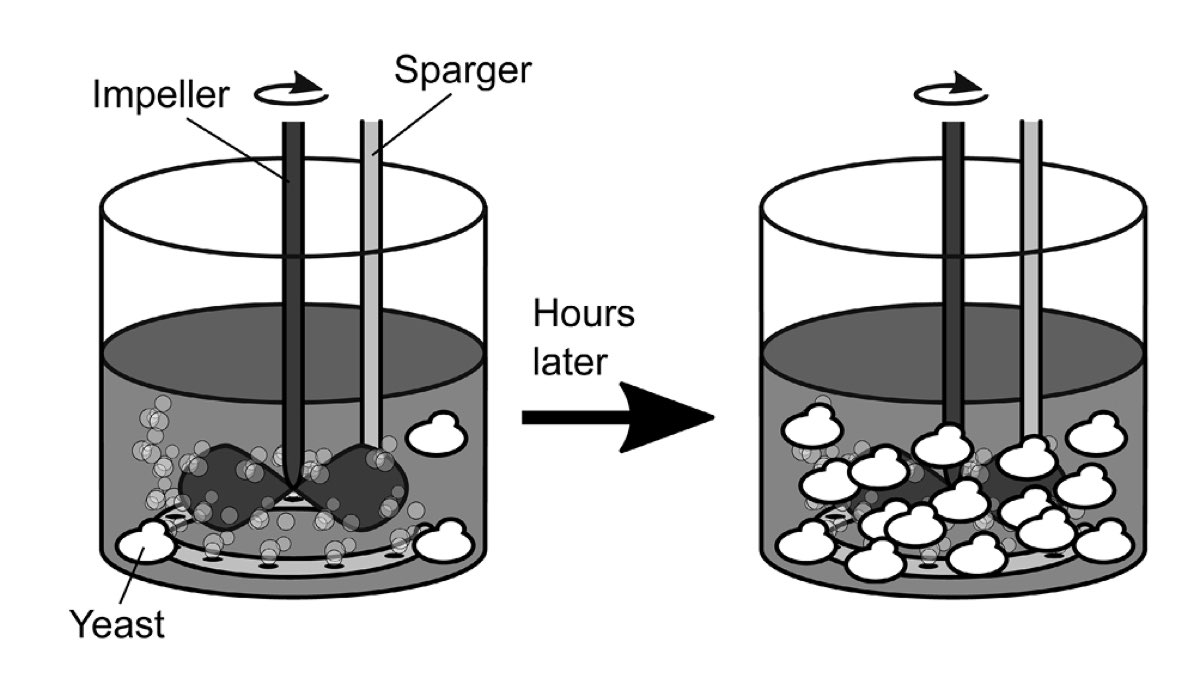
Figure 5. Linear versus exponential growth. Two profiles of Choice 1 and Choice 2 for the inheritance payout. On the left side, we plot the two curves on a typical (linear) axis. The right side plots the same data but uses a logarithmic scale where each tick increment is a multiplicative increase over the previous one. On log scale plot, exponential trends look linear.38
In the same way, yeast cells can multiply themselves with each iteration. Because most food conditions are hardly the ideal scenario for maximum yield, yeasts do not always double themselves (as anyone who’s ever had their bread loaves come out looking like flat bricks can attest). Generally, yeast will double themselves faster in conditions replete with oxygen and good mixing, i.e., controlled bioreactor conditions (Figure 6). In such an environment, yeast can double themselves as quickly as every ninety minutes.39 To highlight how powerful such speedy autocatalysis is, suppose we started with a single yeast cell, which is twenty picograms, about a quarter the mass of a single red blood cell. Then suppose we had a bioreactor large enough to cultivate the yeast and enough liquid medium to nourish the doubling yeast throughout indefinitely. With all that, we could have the equivalent of Earth’s mass in yeast within just eight days.
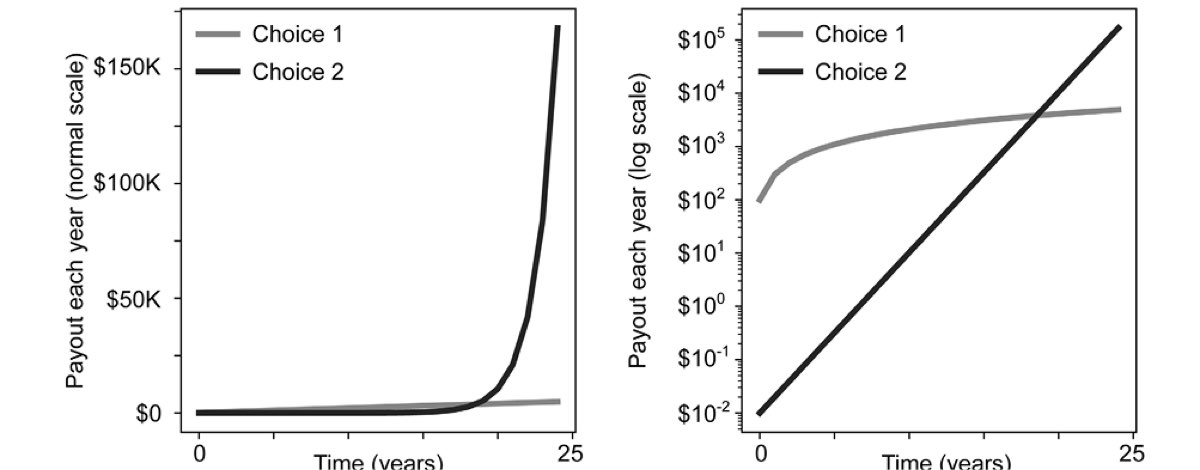
Figure 6. A bioreactor. A bioreactor controls the environment of microorganisms in order to optimize the environmental conditions: availability of nutrients (e.g. mixing by the spinning impeller), bubbling oxygen (e.g. through the sparger), and controlling pH/temperature. Typically, the reactor is seeded (inoculated) with some microbes, which then double rapidly.
It may be worrisome that yeast cells could potentially replicate themselves seemingly interminably. However, sugar will run out, and the yeast will become starved. Furthermore, as I stressed before, the conditions have to be ideal. Otherwise, the yeast may not grow fast enough, and the majority of the time, there’s no growth at all. Yeast is not the only organism capable of such exquisite autocatalysis. Virtually any microorganism is capable too, including bacteria and other single-celled fungi. We have even been able to take cells from human kidneys, insects, and cancer and suspend them in reactors and cultivate them for many doublings. Some bacteria double themselves incredibly quickly. For example, Escherichia coli is the most well-studied organism on the planet, mainly because it is so easy to grow. In the optimal conditions, E. coli bacteria can double themselves every twenty minutes, meaning that a single cell can reach the mass of the Earth in just four days, compared to the eight days for the yeast under perfect bioreactor conditions.
Note: you’ve probably heard that E. coli is antagonistic to our health. There is some nuance here. Most E. coli strains are beneficial and abundant within our gut. In fact, there is a good chance that you have copious E. coli in your body right now. There are E. coli subspecies that produce Shiga toxin. Shiga toxin-producing E. coli (STEC) are worrisome, but generally they are the miniscule minority of all E. coli that are spread from fecal matter.
Given the metrics, microbes and fermentation processes should intrigue us as we consider alternatives for creating bulk and specialized protein. First, how much of the microbes’ mass is protein? Quite a bit, it turns out. Microorganisms are approximately fifty percent protein by mass. So just in terms of bulk protein, they are more than up to the task. To produce specialized proteins, we can heterologously import desired genes into the host. As discussed earlier, we’ve done this for insulin, and actually have already started for heparin.40 In fact, in both these cases, the microbial source is cleaner and cheaper than the animal-based method and has essentially supplanted the animal sources. Similarly, Impossible Foods imported the genes for heme catalysis into yeast; engineered the yeast organisms’ metabolisms to produce heme; and consequently, the heme can be harvested from the same bioreactor processes used in beer production—and not from beef blood. Certainly, the microorganisms cannot do everything yet; however, there are companies—New Harvest, Clara Foods, Perfect Day, and Geltor to name a few—working specifically to produce casein, egg albumin, whey, and collagen/gelatin using microorganisms.
And what would a meat-producing fermentation process look like? We don’t have too far to look: consider the single-cell protein, alternative meat product Quorn.41 The bulk of Quorn is sourced from the fungal F. venenatum single cell organism, much like yeast, grown in bioreactors. After screening this fungus from a variety of candidates in the 1960s, Quorn was extensively tested for safety and toxicity for the next fifteen years. Toxicology tests were performed on eleven different animal species and a human trial with 2500 people.42 Quorn is arguably the most safety-tested food product on the planet, yet it was not until 1985, after that extensive testing, that Quorn became available to the European public.43
In terms of process, the F. venenatum duplicate themselves in a bioreactor and then are heat treated to reduce their DNA and RNA content, per imposed safety criteria.44 The mixture is then centrifuged, or placed in a spinning chamber to separate out large components from smaller ones. At this point, a fungal protein paste remains and can be shaped and set like any other industrial animal-meat paste. You might not be familiar with this principle, but it is the step before chicken, pork, and/or beef mash is formed into those recognizable nuggets, hot dogs, and patties.
There is room for improvement in the Quorn process. Egg albumin is sometimes added to the fungal paste to help solidify the end product. Instead, what if we could have two different organisms in the fermenter, one producing the protein and another producing the albumin? We might also have other strains for taste, structure, or to add health supplements. If we have GMO acceptance, then we can imagine more possibilities. The fungal cells could directly produce the albumin, taste molecules, or vitamins, if we change their DNA to do so.
Fermentation-based food production works superlatively because of the autocatalysis of the microbes. Certainly, animals are capable of autocatalysis. They do reproduce more of themselves. In fact, this reproduction is a huge process advantage. The producers merely have to ensure that the animals are fed and kept well enough to reproduce. That way, they sustain the chemical process indefinitely. If fermentation engineering with microbes does end up being the disruptive process that supplants animal agriculture, then we should figure out what the expected gain is; hence, onto the next chapter.
Chapter Terms
- kinetics: how fast a chemical reaction (conversion) occurs; typically a function of the reactant compound concentrations (e.g. concentration of hydrogen and nitrogen gas for the Haber process)
- reactors: environmentally-controllable vats for conducting a chemical reaction. A bioreactor controls biochemical reactions especially ones depending on the autocatalysis of microbes.
- catalyst: anything that increases the kinetics of a reaction without being consumed itself
- adsorb: when a chemical molecule sits on a surface
- allied products: parallel products sold by the animal-agriculture industry that are not for direct consumption. These include leather, pharmaceutical products, and the collagen/gelatin in beauty, medical, and food products.
- denature: the tendency of proteins to deform under non-native conditions
- enzymes: proteins within the biological organisms that function as catalysts for metabolism. Enzymes facilitate the conversion of sugar to ethanol, to CO2, and to more yeast mass/cells.
- linear: a trend or growth that occurs in a straight line over time
- exponential: a trend or growth that bends upward over time
- autocatalytic: the property of something to make more of itself faster (exponentially). All biological organisms are autocatalytic under the right conditions.
- centrifugation: A separation process where a liquid sample is placed in a fast rotation chamber to increase gravity and thereby separate the small components from large ones
Chapter Summary
Processes ultimately determine what sort of common products come into our lives. For example, the Haber process enabled the facile production of ammonia, which thereby resulted in a population explosion in the last century as it became easier to produce more food with less effort. Likewise, the Haber process, together with refrigeration technology, and general increase in demand for meat, ushered in more efficient animal-product processes, primarily using cows, pigs, and chickens. Looking at the big picture, animal products provide protein—both nondescript and specialized fat, vitamins, and taste profiles. There is no fundamental, physical reason why these molecules cannot be eventually sourced from microorganisms such as yeast and bacteria. These microorganisms exhibit impressive process features (e.g. autocatalysis), and they have, accordingly, endured since ancient times as a means to produce beer, wine, and bread. Furthermore, fermentation-engineering principles enable scalable chemical production using biological systems.
Footnotes
-
Product Design. (2020). Wikipedia. https://en.wikipedia.org/w/index.php?title=Product_design&oldid=978871905 (Accessed November 8, 2020). ↩
-
Panzarino, M. (2012). This Is How Apple’s Top Secret Product Development Process Works. The Next Web. https://thenextweb.com/apple/2012/01/24/this-is-how-apples-top-secret-product-development-process-works/ (Accessed December 22, 2019).
Murphy, M. (2018). What It Was like Working at Apple to Create the First iPhone. Quartz. https://qz.com/1380188/ken-kocienda-qa/ (December 22, 2019). ↩
-
What Is the Design Process? James Dyson Foundation. https://www.jamesdysonfoundation.com/content/dam/pdf/Standalone_DesignProcess.pdf. ↩
-
Nicolas Leblanc | French Chemist. Encyclopedia Britannica. https://www.britannica.com/biography/Nicolas-Leblanc (Accessed December 22, 2019). ↩
-
Katz, D. L. (1980). History of Chemical Engineering, Advances in Chemistry, Series 190. ↩
-
Manufacturing of Sodium Carbonate by Solvay Process. (2014). worldofchemicals.com. https://www.worldofchemicals.com/440/chemistry-articles/manufacturing-of-sodium-carbonate-by-solvay-process.html (Accessed November 12, 2020). ↩
-
Chocolate Crystals, and the Chemistry behind Tempering Chocolates. Chocolate Tempering Machines. https://www.chocolatetemperingmachines.com/pages/chemistry-behind-tempering-chocolates (Accessed January 19, 2021). ↩
-
Hayward, J. (2000). Too Little, Too Late: An Analysis of Hitler’s Failure in August 1942 to Damage Soviet Oil Production. The Journal of Military History, 64(3), 769. https://doi.org/10.2307/120868.
Operation Barbarossa. (2019). Wikipedia. https://en.wikipedia.org/w/index.php?title=Operation_Barbarossa&oldid=931734815 (Accessed December 22, 2019). ↩
-
Shapiro, P., and Harari, Y.N. (2018). Clean Meat: How Growing Meat Without Animals Will Revolutionize Dinner and the World. 1st edition. New York: Gallery Books. ↩
-
McCollough, J., & Check, H. F. (2010). The baleen whales’ saving grace: The introduction of petroleum based products in the market and its impact on the whaling industry. Sustainability, 2(10), 3142–3157. https://doi.org/10.3390/su2103142. ↩
-
Sedentism. (2019). Wikipedia. https://en.wikipedia.org/w/index.php?title=Sedentism&oldid=921051968 (Accessed December 22, 2019). ↩
-
Russell, N. (2002). The wild side of animal domestication. Society and Animals, 10(3), 285–302. https://doi.org/10.1163/156853002320770083. ↩
-
Alvard, M. S., & Kuznar, L. (2001). Deferred Harvests: The Transition from Hunting to Animal Husbandry. American Anthropologist, 103(2), 295–311. https://doi.org/10.1525/aa.2001.103.2.295. ↩
-
Vann, M. (April 10, 2009). A History of Pigs in America. https://www.austinchronicle.com/food/2009-04-10/764573/ (Accessed December 22, 2019). ↩
-
Scanes, C. G. (2018). The Neolithic Revolution, Animal Domestication, and Early Forms of Animal Agriculture. Elsevier Inc. https://doi.org/10.1016/B978-0-12-805247-1.00006-X. ↩
-
Burrow, H. M., Moore, S. S., Johnston, D. J., Barendse, W., & Bindon, B. M. (2001). Quantitative and molecular genetic influences on properties of beef: A review. Australian Journal of Experimental Agriculture, 41(7), 893–919. https://doi.org/10.1071/EA00015. ↩
-
Burrow, H. M., Moore, S. S., Johnston, D. J., Barendse, W., & Bindon, B. M. (2001). Quantitative and molecular genetic influences on properties of beef: A review. Australian Journal of Experimental Agriculture, 41(7), 893–919. https://doi.org/10.1071/EA00015. ↩
-
Speth, J. D. (2010). Big-Game Hunting in Human Evolution: The Traditional View. In J. D. Speth (Ed.), The Paleoanthropology and Archaeology of Big-Game Hunting: Protein, Fat, or Politics? (pp. 39–44). Springer. https://doi.org/10.1007/978-1-4419-6733-6_3. ↩
-
Allen, R., & Allen, R. C. (2007). How Prosperous were the Romans? Evidence from Diocletian`s Price Edict. Economics Series Working Papers, (363). ↩
-
Orchard, J. E., & Buck, J. L. (1938). Land Utilization in China. Geographical Review, 28(4), 698. https://doi.org/10.2307/210316. ↩
-
“List of Countries by Meat Consumption.” (2019). Wikipedia. https://en.wikipedia.org/w/index.php?title=List_of_countries_by_meat_consumption&oldid=930341394 (Accessed December 22, 2019).
Coming from mainly the following reference:
Current Worldwide Annual Meat Consumption per capita, Livestock and Fish Primary Equivalent. Food and Agriculture Organization of the United Nations. ↩
-
Smil, V. (2013). Should We Eat Meat?: Evolution and Consequences of Modern Carnivory (1st edition). Wiley-Blackwell. ↩
-
MacDonald, J. M., & McBride, W. D. (2011). The Transformation of U.S. Livestock Agriculture Scale, Efficiency, and Risks. SSRN Electronic Journal, (43). https://doi.org/10.2139/ssrn.1354028. ↩
-
Transparency Market Research. (2017). Heparin Market to Reach a Valuation of US$ 16.3 Billion by the End of 2025: Transparency Market Research. GlobeNewswire News Room. http://www.globenewswire.com/news-release/2017/11/08/1177610/0/en/Heparin-Market-to-Reach-a-Valuation-of-US-16-3-Billion-by-the-End-of-2025-Transparency-Market-Research.html (Accessed December 22, 2019). ↩
-
Gladwell, M. (2017). “Revisionist History Season 2 Episode 9.” Revisionist History. http://revisionisthistory.com/episodes/19-mcdonalds-broke-my-heart (Accessed December 22, 2019). ↩
-
Marti, D. L., Johnson, R. J., & Mathews, K. H. (2012). Where’s the (Not) meat? Byproducts from beef and pork production. There’s The Beef: Select Research on Global Beef Production and Trade, 55–81. ↩
-
Tyson Foods, Inc. (2018). Form 10-K. United States Securities and Exchange Commission Specifically, page 25. ↩
-
Apple Operating Margin 2006-2019 | AAPL. (2019). MacroTrends. https://www.macrotrends.net/stocks/charts/AAPL/apple/operating-margin (Accessed December 22, 2019). ↩
-
Coca-Cola Profit Margin 2006-2019 | KO. (2019). MacroTrends. https://www.macrotrends.net/stocks/charts/KO/coca-cola/profit-margins (Accessed December 22, 2019). ↩
-
The History Behind Bovine Serum Albumin. (2017). Lifecycle Biotechnologies. https://www.lifecyclebio.com/history-behind-bovine-serum-albumin/ (Accessed December 22, 2019). ↩
-
Impossible Foods. Impossible Foods. https://impossiblefoods.com/ (Accessed December 22, 2019). ↩
-
National Beer Sales & Production Data. Brewers Association. https://www.brewersassociation.org/statistics-and-data/national-beer-stats/ (Accessed December 22, 2019). ↩
-
History of Beer. Heartland Brewery. https://www.heartlandbrewery.com/history-of-beer/ (Accessed December 22, 2019). ↩
-
Historie. Weihenstephaner Brewery. https://www.weihenstephaner.de/die-brauerei/historie/ (Accessed December 22, 2019). ↩
-
Orth, J. D., Thiele, I., & Palsson, B. O. (2010). What is flux balance analysis? Nature Biotechnology, 28(3), 245–248. https://doi.org/10.1038/nbt.1614. ↩
-
I calculated using the values as follows: Start with the pitch rate from the following source: Pitch Rates. Wyeast Laboratories. https://wyeastlab.com/pitch-rates (Accessed December 22, 2019). So (100 to 300 billion yeast pitched into a beer fermentation). Each yeast is roughly 20 picogram per this source: Size and Composition of Yeast Cells - Budding Yeast Saccharomyces Ce - BNID 108315. BioNumbers. https://bionumbers.hms.harvard.edu/bionumber.aspx?id=108315&ver=3&trm=yeast+mass&org= (Accessed December 22, 2019). ↩
-
Lei, H., Feng, L., Peng, F., & Xu, H. (2019). Amino Acid Supplementations Enhance the Stress Resistance and Fermentation Performance of Lager Yeast During High Gravity Fermentation. Applied Biochemistry and Biotechnology, 187(2), 540–555. https://doi.org/10.1007/s12010-018-2840-1. ↩
-
My calculations are detailed and available here: https://github.com/karsekar/fwoap/blob/master/book/exponentiallinear/notebook.ipynb. ↩
-
Doubling Time of ‘Normal’ Laboratory Haploid - Budding Yeast Saccharomyces Ce - BNID 108255. BioNumbers. https://bionumbers.hms.harvard.edu/bionumber.aspx?id=108255&ver=5&trm=yeast+synthetic+ complete+medium&org= (Accessed December 22, 2019). ↩
-
Oduah, E. I., Linhardt, R. J., & Sharfstein, S. T. (2016). Heparin: Past, present, and future. Pharmaceuticals, 9(3), 1–12. https://doi.org/10.3390/ph9030038. ↩
-
Wiebe, M. (2004). QuornTM Myco-protein — Overview of a successful fungal product. Mycologist, 18(1), 17–20. https://doi.org/10.1017/S0269915X04001089. ↩
-
Moore, D., Robson, G. D., & Trinci, A. P. J. (2020). 21st Century Guidebook to Fungi (2nd edition). Cambridge University Press. http://www.davidmoore.org.uk/21st_Century_Guidebook_to_Fungi_PLATINUM/Ch17_18.htm (Accessed December 2, 2020). ↩
-
Wiebe, M. (2002). Myco-protein from fusarium venenatum: A well-established product for human consumption. Applied Microbiology and Biotechnology, 58(4), 421–427. https://doi.org/10.1007/s00253-002-0931-x. ↩
-
Ritala, A., Häkkinen, S. T., Toivari, M., & Wiebe, M. G. (2017). Single cell protein-state-of-the-art, industrial landscape and patents 2001-2016. Frontiers in Microbiology, 8(OCT). https://doi.org/10.3389/fmicb.2017.02009. ↩
Text licensed CC BY 4.0; figures excluded — see the license.